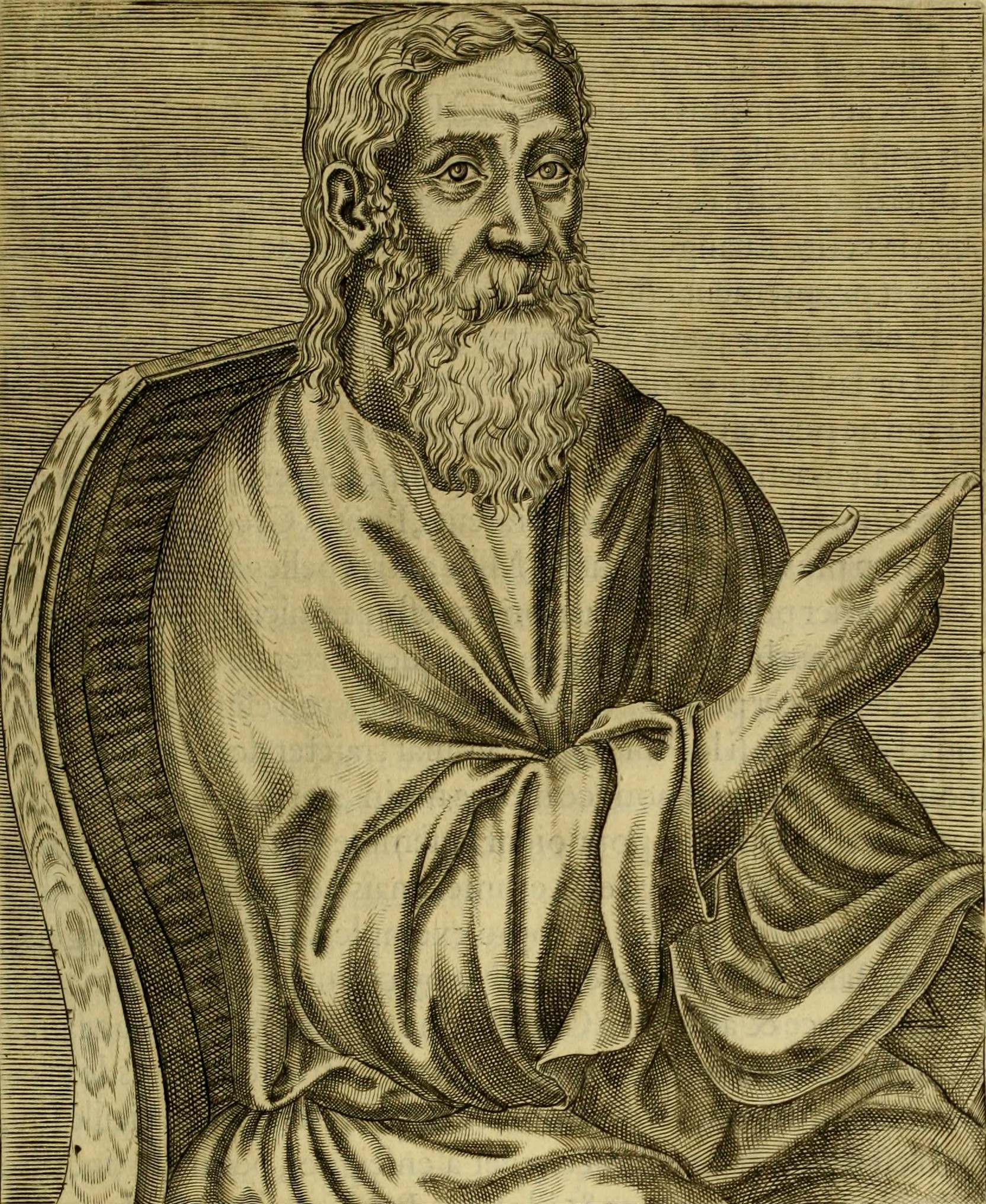
Historical depiction associated with Clement of Alexandria.
Portrait sourceAndré Thévet · Public domain
Clement of Alexandria · Author Profile
Titus Flavius Clemens, also known as Clement of Alexandria (Ancient Greek: Κλήμης ὁ Ἀλεξανδρεύς; c. 150 – c. 215 AD), was a schematic Christian theologian and philosopher who taught at the Catechetical School of Alexandria. In this library, Clement of Alexandria is linked to 3 documents, including Exhortation to the Heathen, The Instructor, and The Stromata.
- Activity
- AD 150 - AD 215
- Documents in this library
- 3
- Corpus date window
- AD 195-200
Works in This Library
History and Context
Titus Flavius Clemens, also known as Clement of Alexandria (Ancient Greek: Κλήμης ὁ Ἀλεξανδρεύς; c. 150 – c. 215 AD), was a schematic Christian theologian and philosopher who taught at the Catechetical School of Alexandria. Among his pupils were Origen and Alexander of Jerusalem. A convert to Christianity, he was an educated man who was familiar with classical Greek philosophy and literature. As his three major works demonstrate, Clement was influenced by Hellenistic philosophy to a greater extent than any other Christian thinker of his time, and in particular, by Plato and the Stoics. His secret works, which exist only in fragments, suggest that he was familiar with pre-Christian Jewish esotericism and Gnosticism as well. In one of his works he argued that Greek philosophy had its origin among non-Greeks, claiming that both Plato and Pythagoras were taught by Egyptian scholars. Clement of Alexandria is described in reference records as theologian, philosopher, and writer. Place associations in major reference datasets include Athens and Kayseri. The documents preserved here span AD 195-AD 200 and include Exhortation to the Heathen, The Instructor, and The Stromata (3 total).
What We Know
- Activity window in reference data: AD 150 - AD 215.
- Approximate lifespan from biographical records: AD 150-AD 215.
- Roles in major reference data: theologian, philosopher, and writer.
- No securely dated office chronology is preserved in current reference records.
- Associated places: Athens and Kayseri.
- Tradition or confessional marker: Christianity.
- Languages linked to writing or transmission: Ancient Greek.
- Notable works cited in reference data: Protrepticus and Excerpts of Theodotus.
- Documents in this corpus: 3 (Exhortation to the Heathen, The Instructor, and The Stromata).
- Corpus date range for attributed texts: AD 195-AD 200.
Legacy
Titus Flavius Clemens, also known as Clement of Alexandria (Ancient Greek: Κλήμης ὁ Ἀλεξανδρεύς; c. 150 – c. As his three major works demonstrate, Clement was influenced by Hellenistic philosophy to a greater extent than any other Christian thinker of his time, and in particular, by Plato and the Stoics. Clement of Alexandria's reception in theology and church history is closely tied to ongoing study of Exhortation to the Heathen, The Instructor, and The Stromata.
Source Notes
Wikipedia biographical overview
Wikidata entity record
Primary text in this corpus (Exhortation to the Heathen)
Primary text in this corpus (The Instructor)
Primary text in this corpus (The Stromata)
Portrait source
https://commons.wikimedia.org/wiki/File:Clement_alexandrin.jpg