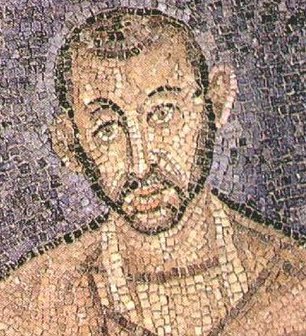
Portrait image associated with Ambrose of Milan from Wikimedia media records.
Portrait sourceWikimedia Commons contributors · Public domain
Ambrose of Milan · Author Profile
Ambrose of Milan (Latin: Aurelius Ambrosius; c. 339 – 4 April 397), canonized as Saint Ambrose, was a theologian and statesman who served as Bishop of Milan from 374 to 397. He expressed himself prominently as a public figure, fiercely promoting Nicene Christianity against Arianism and paganism. In this library, Ambrose of Milan is linked to 2 documents, including On the Holy Spirit and On the Mysteries.
- Activity
- AD 339 - April 4, AD 397
- Documents in this library
- 2
- Corpus date window
- AD 381-387
Works in This Library
History and Context
Ambrose of Milan (Latin: Aurelius Ambrosius; c. 339 – 4 April 397), canonized as Saint Ambrose, was a theologian and statesman who served as Bishop of Milan from 374 to 397. He expressed himself prominently as a public figure, fiercely promoting Nicene Christianity against Arianism and paganism. He left a substantial collection of writings, of which the best known include the ethical commentary De officiis ministrorum (377–391), and the exegetical Exameron (386–390). His preaching, his actions and his literary works, in addition to his innovative musical hymnography, made him one of the most influential ecclesiastical figures of the 4th century. Ambrose was serving as the Roman governor of Aemilia-Liguria in Milan when he was unexpectedly made Bishop of Milan in 374 by popular acclamation. Ambrose of Milan is described in reference records as writer, philosopher, theologian, Catholic priest, and 2 more. Recorded offices include Roman governor, Roman Catholic Archbishop of Milan (AD 374-AD 397), and bishop. Place associations in major reference datasets include Trier, Augusta Treverorum, Milan, and Mediolanum. The documents preserved here span AD 381-AD 387 and include On the Holy Spirit and On the Mysteries (2 total).
What We Know
- Activity window in reference data: AD 339 - April 4, AD 397.
- Approximate lifespan from biographical records: AD 339-AD 397.
- Roles in major reference data: writer, philosopher, theologian, Catholic priest, politician, and 1 more.
- Ecclesial or civic offices recorded: Roman governor, Roman Catholic Archbishop of Milan (AD 374-AD 397), and bishop.
- Associated places: Trier, Augusta Treverorum, Milan, and Mediolanum.
- Tradition or confessional marker: Catholic Church.
- Languages linked to writing or transmission: Latin and Ancient Greek.
- Notable works cited in reference data: Hymns, Hexaemeron, De virginibus, and Versus de naturis rerum.
- Documents in this corpus: 2 (On the Holy Spirit and On the Mysteries).
- Corpus date range for attributed texts: AD 381-AD 387.
Legacy
339 – 4 April 397), canonized as Saint Ambrose, was a theologian and statesman who served as Bishop of Milan from 374 to 397. He left a substantial collection of writings, of which the best known include the ethical commentary De officiis ministrorum (377–391), and the exegetical Exameron (386–390). Ambrose of Milan's reception in theology and church history is closely tied to ongoing study of On the Holy Spirit and On the Mysteries.
Source Notes
Wikipedia biographical overview
Wikidata entity record
Primary text in this corpus (On the Holy Spirit)
Primary text in this corpus (On the Mysteries)
Portrait source
https://commons.wikimedia.org/wiki/File:AmbroseOfMilan_(cropped).jpg